
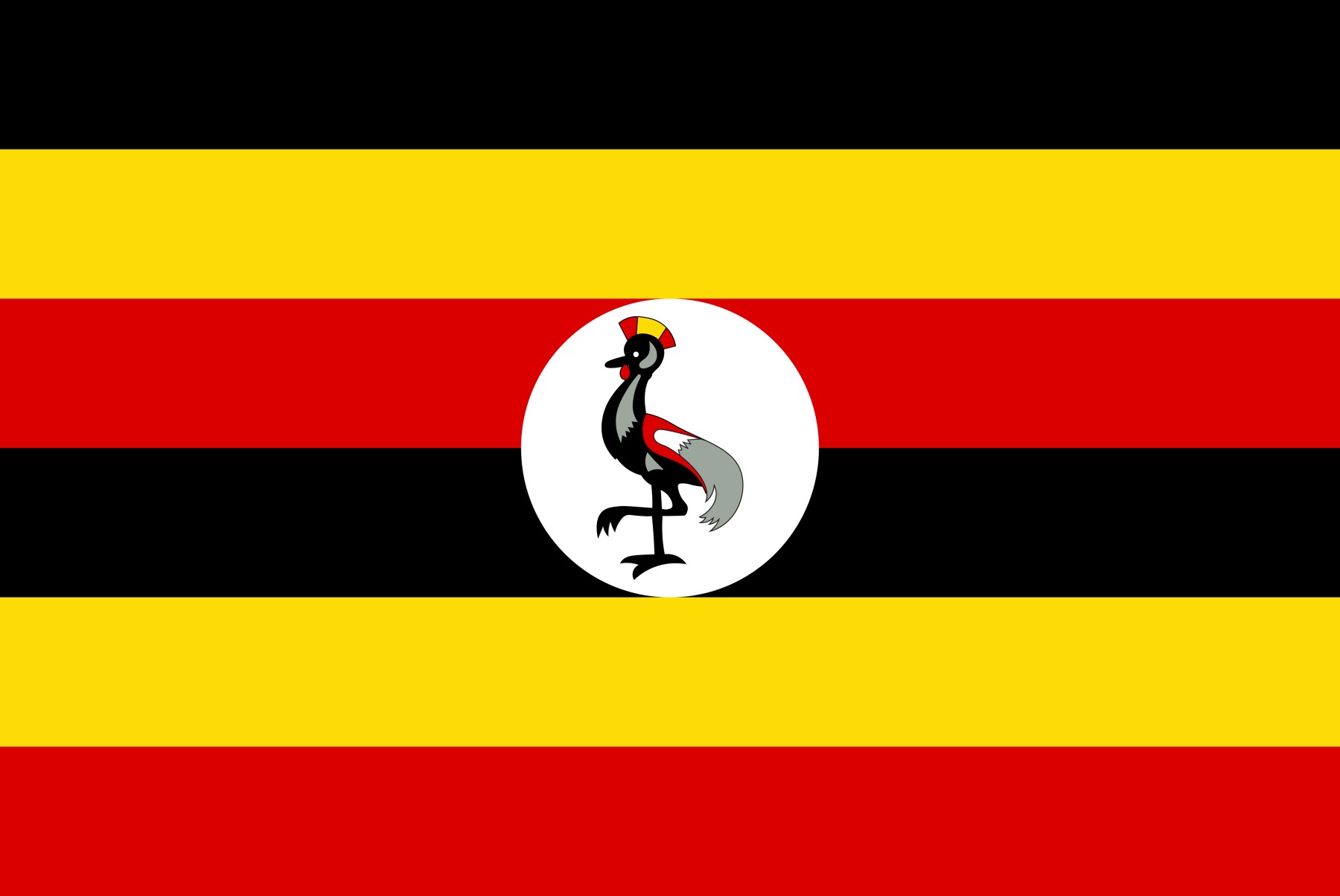
As of March 2024, the estimated population of Uganda is 48.5 million.
The currency in Uganda is the Ugandan Shilling (UGZ). The currency symbol is USh.

Uganda's Employment Act does not specifically define permanent employment or prohibit hiring fixed-term contract employees for tasks of a permanent nature.
Uganda's labor law generally allows the use of both oral and written contracts. However, a contract of service made with an employee who cannot read or understand the language in which the contract is written must be attested to by a labor officer or magistrate. Additionally, a written statement of particulars must be provided to the employee within 12 weeks of the employment commencement. The written statement must at least include the following information: Full names and addresses of the contracting parties Employment start date Workplace Job title Rate of overtime pay Wages including payment intervals and other deductions Employee's normal work hours and the shifts or days of the week during which such work is to be performed The number of days for the annual leave and wages during the period Terms relating to incapacity for work due to sickness or injury Length of notice and sick pay. Employers are required to provide the above information in a language that the employee can easily understand.
Although Uganda's Employment Act does not specifically address temporary employees, Uganda's Employment Regulations include special provisions regarding certain temporary employees (namely, casual employees, piece work employees, and task work employees). Casual employees can be employed for up to four months. If these employees are engaged continuously for 4 months, they cease to be casual employees and acquire all rights and benefits enjoyed by other employees. Where a casual employee is laid off by an employer and rehired, the continuous service period is not regarded as broken. Piece work is any employment where a worker is paid a fixed piece rate for each unit produced or action performed, regardless of time worked. Piece work employees may be engaged for a maximum of 3 months without a contract. Piece work employees must be paid at the end of each month in proportion to the amount of work performed during that month or on completion of that work, whichever date is earlier. Task work employees are defined as employees who perform their work based on a daily task, that is, an amount of work performed in a day of not more than 8 working hours.
Per Uganda's Employment Act, the maximum length of a probationary period is 6 months. However, the probationary period may be extended for a further period of not more than 6 additional months with the employee's agreement. An employer may not place the same employee under probation twice. A probationary contract may be terminated by either party after giving at least a 14-day notice or by the employer after paying 7 days' wages in lieu of notice.
Per Uganda's Employment Act, the maximum working hours for employees are generally 48 hours per week and 8 hours per day. However, an employee and employer may agree in advance to increase the maximum working hours per week to more than 48 hours. In that case, hours of work shall not exceed 10 hours per day or 56 hours per week. Even then, it is permissible to employ shift workers for more than 10 hours in any one day or 48 hours in any 1 week (without paying overtime) as long as the average number of hours over a period of three weeks does not exceed 10 hours per day and 56 hours per week. In any organization where the maximum working hours are at least 8 hours per day, a 30-minute break must be granted to employees. After consultation with the Labor Advisory Board, the Minister may regulate the maximum number of hours per week (including overtime work) that may be worked in any industry or occupation. By order, the minister may also provide for temporary exceptions in extraordinary situations where the public interest requires.
2026
2027
In Uganda, all employees who have performed continuous service for their employer for a minimum period of 6 months and those who normally work under a contract of service for 16 hours a week or more are entitled to annual leave. Per Uganda's Employment Act, an employee is entitled to 21 annual paid leave days each year at the rate of 7 days for each continuous 4-month period of service. Employees can take their annual leave at any time during a particular calendar year, subject to any prior agreement they have made with their employer. The 21 days of leave only includes working days. Public holidays are also not counted as leave days. If an employee gets sick during annual leave, it will still be counted as part of annual leave and not sick leave. Annual leave days cannot be carried forward into another calendar year unless the employee and employer mutually agree to do so.
Per Uganda's Employment Act, an employee who has completed at least one month of continuous service (and at least 16 hours per week) with an employer and is incapable of work because of sickness or injury is entitled to sick pay as follows: For the first month's absence from work, the employee is entitled to full wages and all other benefits stipulated in the service contract. If the sickness continues after the first month, the employer is entitled to terminate the service contract upon compliance with all terms within it. The employer bears the full cost of sick leave. For the employee to be entitled to sick pay, they must notify (or cause to be notified) the employer of their absence and the reason for it as soon as is reasonably practicable. If requested by their employer, the employee must also produce a written certificate signed by a qualified medical practitioner certifying the employee's incapacity for work and the duration of the incapacity.
In Uganda, female employees are entitled to 60 working days of fully paid maternity leave, of which at least 4 weeks must follow childbirth or miscarriage. The employer is responsible for paying 100% of the employee's earnings during maternity leave. A female employee who becomes pregnant has the right to return to the job she held immediately before her maternity leave or to a reasonably suitable alternative job on terms and conditions equally favorable to those she would have received had she not been absent on maternity leave. In the event of sickness arising out of pregnancy or confinement that affects either the mother or the baby and makes the mother's return to work inadvisable, the right to return must be available within 8 weeks after the date of childbirth or miscarriage.
In Uganda, male employees are entitled to a period of 4 working days of paternity leave per year. The leave must be taken immediately after the wife's delivery or miscarriage. During this leave, the male employee is entitled to his regular wages, to be paid by the employer. After his paternity leave, a male employee has the right to return to the job which he held immediately before the leave.
Per Uganda's Employment Act, before deciding to dismiss an employee on the grounds of misconduct or poor performance, an employer must explain the reason for dismissal to the employee. In addition, the employee is entitled to have another person of their choice present during this conversation. Employers who fail to comply with this procedure are liable to pay the employee a sum equivalent to 4 weeks of net pay. The statutory minimum notice period in Uganda is established according to the employee's length of service: At least 2 weeks, for a period of service of more than 6 months but less than 1 year At least 1 month, for a period of service of more than 12 months but less than 5 years At least 2 months, for a period of service of more than 5 years but less than 10 years At least 3 months, for a period of service of 10 years or more The notice must be in writing and in a form and language that the employee can reasonably be expected to understand. Employees may accept payment in lieu of notice. When the employee's pay period is longer than the period of notice to which the employee would be entitled, the employee is entitled to notice equivalent to that pay period.
In Uganda, employers must pay a severance allowance if an employee has been in continuous service with the employer for a period of 6 months or more and where any of the following conditions apply: The employer unfairly dismisses the employee The employee dies in their employer's service (other than a death caused by the employee's own serious and willful misconduct) The employee terminates their contract because of a physical incapacity (not brought about by their own serious and willful misconduct) The employer dies or becomes insolvent A labor officer terminates the contract following the inability or refusal of the employer to pay wages Payment of a severance allowance is not required in the following circumstances: The employee is summarily dismissed with justification The employee is dismissed by the employer and unreasonably refuses to accept an offer of re-employment by the employer at the same workplace and under terms and a wage rate no less favorable than they had when employed immediately before dismissal The employee abandons their employment or absconds from their place of work without leave for a period of more than 3 days without an explanation being provided to the employer A severance allowance is not required upon the termination of a probationary contract. The amount of severance pay is to be negotiated between the employer and the employee or union representing the employee.
Uganda's National Social Security Fund Act provides old-age benefits to employees who have attained 55 years of age. As of January 4, 2022, participants of the country's pension program who are 45 years or older and have at least 10 years of contributions are eligible to withdraw up to 20% of their account balances prior to the normal retirement age of 55. Previously, early withdrawals were only allowed for participants at least 50 years of age, but the Ugandan president approved this change to provide relief for those impacted by COVID-19. All employers, regardless of the number of employees, must register and contribute for their employees, and individuals may also join voluntarily. Insured employees must contribute 5% of gross monthly earnings. The voluntarily insured and self-employed must contribute at least 7.5% of gross monthly earnings. Employers must contribute 10% of gross monthly payroll.
Uganda's National Social Security Fund Act provides for survivors' benefits to dependents. When a member dies, survivors' benefits must first be paid to the closest dependents, specifically a spouse, children under 18, or adult children who were wholly or largely supported by the deceased. If none of these dependents exist, the benefit is instead paid to the deceased’s parents, brothers, or sisters. If none of those relatives exist, the benefit goes to grandparents, grandchildren, or any other relatives that the Minister has designated as eligible. A total lump sum of employee and employer contributions, plus interest, is paid to the dependents as a benefit if an insured worker dies before retirement. In the case of an employee's death due to work-related accidents or diseases, the employer pays compensation to survivors equal to 60 months' earnings. If the deceased employee has already been compensated for the injury while alive, the employer-paid benefit is reduced by 50%.
Uganda's National Social Security Fund Act provides for invalidity benefits under the following circumstances: Individuals are permanently disabled for any work that they were able to perform before the disability began Individuals have permanent partial invalidity that prevents them from earning a reasonable living A lump sum of total employer and employee contributions plus interest is paid in the case of permanent disability. In case of disability due to work-related accidents or diseases, it is the employer's responsibility to pay compensation to employees. If the insured has a total permanent disability, a lump sum of up to 60 months of earnings is paid. In the case of permanent partial disability, a percentage of the full benefit is issued according to the assessed degree of disability. In case of temporary disability, a lump sum or periodic payments are granted up to a maximum of 96 months. Both employees and employers contribute to the social security fund.
Per Uganda's tax law, natural persons who have chargeable income for the year are subject to income tax. The fiscal year in Uganda runs from July 1 through June 30 of the following year. Employers have an obligation to withhold income tax from each payment to an employee and remit it to the authorities. A resident is a person who meets the following criteria: Has a permanent home in Uganda Is present in Uganda for 183 days or more in any 12-month period that commences or ends during the year of income Is present in Uganda during the year of income and in each of the 2 preceding years, for periods averaging 122 days in each such year of income Is an employee or an official of the Government of Uganda posted abroad during the year of income. The scope of tax liability depends on a person's residence status. For a resident, income tax is charged on gross income from all over the world. The tax for a non-resident person is only charged on income derived from sources within Uganda. Tax rates vary from 0% to 40% of monthly income.
There are 5 types of visas available in Uganda:
Uganda issues the following work permits: Class B1 - Agriculture Class A2 - Government contractors Class C1 - Mining Class E - Manufacturing Class A - Diplomatic service Class D - Business and trade Class G1 - Missionaries and Volunteer NGO Workers Class G3 - Expatriate employees (Rare Skills) Class G2 - Expatriate employees Class B2 - Investment in agriculture Class A - Official service Class F - Professionals Class C2 - Mining (Gold, Copper, Iron ore) Class H -Ordinary residents Uganda Work Permit Class G The Uganda Work Permit Class G is for employees who intend to work in Uganda. The work can be either on a paid or an unpaid basis. The work permit is issued by the Department of Immigration in cases where a foreigner has provided adequate evidence to the immigration board that they have been offered and have accepted an offer of employment with a specific company or institution operating in Uganda. There are two classes of Ugandan Work Permit Class G: Work permit Class G1 – Volunteers, NGO workers, missionaries Work permit Class G2 – Employees
