
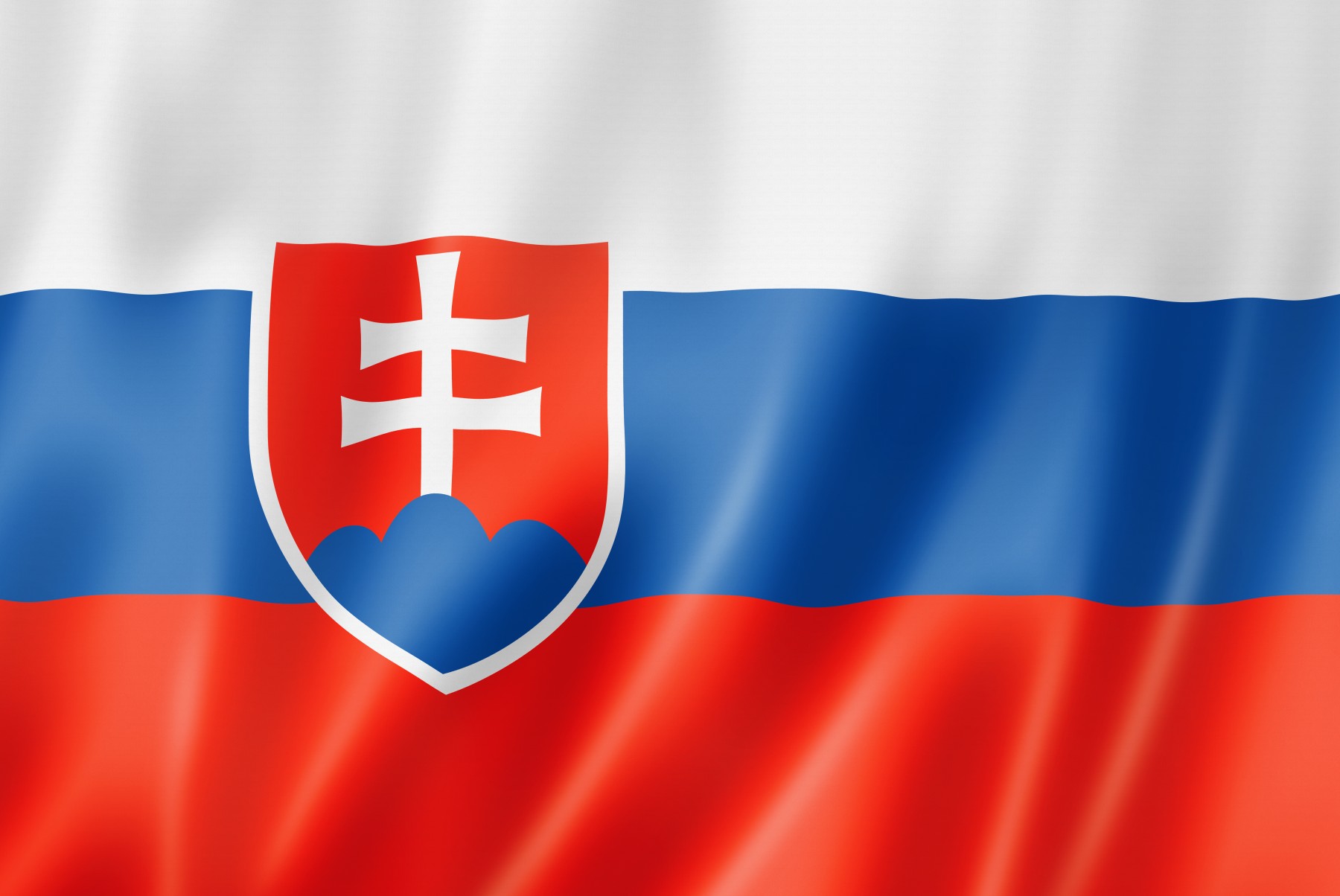
As of March 2024, the estimated population of Slovakia is 5,795,199 people.
The currency in Slovakia is the Euro (EUR). The currency symbol is €.

Under the Slovak Labour Code, a permanent employment relationship is defined as an employment relationship established for an indefinite period. Permanent employment is created through a standard employment contract that does not specify a fixed duration. In the absence of an explicit fixed term, an employment contract is presumed to be indefinite. Permanent employees can be full-time or part-time, with an established weekly working time.
It is mandatory to conclude employment contracts in writing. Employers must issue a written copy of the employment contract to employees with information related to the type of work, place of work, the start of the contract, working hours, wages, amount of leave, notice period, and applicable collective agreements. If the written employment contract does not contain all the required information, the employer must prepare a written notice to the employee containing all conditions within 1 month from the beginning of the employment relationship.
Employers in Slovakia can hire employees from temporary employment agencies for the performance of temporary assignments, called "seconded employees". Temporary assignments can be agreed upon for a maximum of 24 months, extendable. A 3-way written contract is concluded between the user employer and the temporary agency, and the temporary agency and the temporary employee. The user employer organizes, manages, and controls their work, gives them instructions, creates favorable working conditions, and ensures safety and health at work for temporary employees. User employers pay fees to agencies. Temporary employment agencies are liable to pay their wages and travel expenses. If the agency fails to pay wages, the user employer will be responsible for paying wages within 15 days. Companies can also hire seasonal employees whose employment agreement specifies that the work is dependent on seasonal changes, is repeated each year, and does not exceed 8 months in a calendar year.
Probationary period of a maximum of 3 months (6 months for managers) can be agreed to in an employment contract. It must be in writing and cannot be extended. If an employee has not completed the entire work shift due to an obstacle on their part during the agreed upon probationary period, the probationary period can be extended by a day. It is not possible to have a probationary period in case of re-employment for a certain period. During a probationary period, an employment contract can be terminated by either party for any reason or without giving a reason, unless otherwise provided, by giving written notice of termination at least 3 days in advance.
The Labour Code of Slovakia provides that daily working hours cannot exceed 8 hours in a 24-hour period. The employee's working time is a maximum of 40 hours per week. The employee's average weekly working time, including overtime, may not exceed 48 hours. Juvenile employees under the age of 16 can work for a maximum of 30 hours per week. Juvenile employees over the age of 16 can work for a maximum of 37 and 1/2 hours per week. The working time of a juvenile staff member must not exceed 8 hours in any 24-hour period. Employees working with carcinogenic substances or in hazardous areas can work for 33 and 1/2 hours per week. Employees working alternately in both changes in a 2-shift operation can work a maximum of 38 and 3/4 hours a week and a maximum of 37 and 1/2 hours in all changes in a 3-shift or continuous operation.
2026
2027
Employees are entitled to basic, paid annual leave of 4 weeks if they have worked for 60 days in a year. Employees who reach at least 33 years of age by the end of the calendar year, and those who have permanent childcare, are entitled to annual leave of 5 weeks. Employees who work underground for the whole calendar year in the mining of minerals or excavation of tunnels, and employees who perform work that is particularly difficult or harmful to their health, are entitled to an additional holiday of 1 week. Employees are paid their average earnings as compensation during annual leave. Annual leave can be taken, at a maximum, till the end of the following year. Employees who are not entitled to annual leave or a proportion thereof because they have not worked for at least 60 days in the same year for the same employer are entitled to one-twelfth of the annual leave for each of the 21 days worked in the relevant year.
Slovak Labor Code grants 7 days' paid sick leave per year to employees for medical examination or treatment when it cannot be performed outside of working hours. Additional leave can be granted without pay. Unpaid time off is also granted for the required duration. Employees are entitled to sickness benefits if they have been recognized as temporarily incapable of performing work due to illness or injury, or if they have been ordered a quarantine measure or isolation.
Female employees are entitled to 34 weeks of paid maternity leave, with 6 weeks before delivery and 28 weeks after. Single mothers are entitled to a maternity leave of 37 weeks, and women who give birth to 2 or more children at the same time are entitled to a maternity leave of 43 weeks. If a man is responsible for taking care of the child from birth, he is also entitled to the same duration of leave. Employees must have been insured for at least 270 days in the previous 2 years before delivery to be eligible for maternity leave. Eligible employees are entitled to maternity allowance paid by the Social Insurance Agency at the rate of 75% of their average wages for the duration of maternity leave. Employees cannot be dismissed when they are on maternity leave, except in case of redundancy or serious breach of work discipline. If a pregnant woman performs work that is prohibited for pregnant women or which, according to a medical opinion, endangers her pregnancy, the employer is obliged to make a temporary adjustment to working conditions. If it is not possible to reassign the employee to another job, employers must provide them with paid leave.
In Slovakia, fathers are entitled to paternity leave from the child’s birth for 28 weeks (or 31 weeks for a single father, and 37 weeks if 2 or more children are born at the same time. Fathers receive a form of maternity benefit for 14 calendar days within a period of 6 weeks after the birth. They are entitled to 75% of their wages. Fathers are also entitled to the childbirth allowance social benefit if the mother has died, is reported missing, or if the father has custody.
In Slovakia, an employment contract can be terminated by both the employer and the employee by giving written notice. The standard notice period is at least 1 month. For termination unrelated to redundancies or health reasons, the notice period is at least 2 months if the employee has been employed for at least 1 year. Where an employer gives notice for reasons such as organizational changes or redundancy, or because the employee has long-term lost the ability to perform their work for health reasons, the notice period is: At least 2 months if the employment lasted at least 1 year but less than 5 years At least 3 months if the employment lasted 5 years or more at the time the notice was delivered. If an employee does not remain with their employer during their notice period, the employer is entitled to monetary compensation for the notice period.
Employees whose contract is terminated by their employer due to redundancy, relocation of business, or medical reasons are entitled to severance pay as follows: 1 month's average salary if the employee has worked for at least 2 years and less than 5 years 2 months' average salary if the employee has worked for at least 5 years and less than 10 years 3 months' average salary if the employee has worked for at least 10 years and less than 20 years 4 months' average salary if the employee has worked for at least 20 years If the employment contract is terminated with an agreement between the employee and employer, severance pay is increased by 1 month's salary. Employees whose employment ends by notice or agreement because they can no longer perform work due to a work accident or occupational disease are entitled to severance pay of at least 10 times their average monthly earnings. An employee is also entitled to severance pay of at least 1 month’s average earnings when they become a pensioner for the first time. Employees dismissed due to disciplinary issues are not entitled to severance pay.
There are 3 pillars of the old age pension system. The 1st pillar is a mandatory pension scheme, the 2nd pillar is a defined contribution pension scheme managed by pension management companies, and the 3rd pillar is a voluntary pension scheme. From May 1, 2023, individuals under the age of 40 who start employment and become pension insured for the first time are automatically enrolled in the 2nd pillar; participation is not mandatory, as they may opt out within 2 years. Those who were first insured before May 1, 2023, are not automatically enrolled but may join voluntarily until age 40; once they do, participation becomes mandatory and cannot be cancelled. An insured person is entitled to an old-age pension if they have been insured for at least 15 years and have reached retirement age. Retirement age depends on the year of birth of employees. The amount of pension from the 1st pillar depends on the average personal wage point, the period of the pension insurance acquired on the day of entitlement to the old-age pension, and the current pension value, which is adjusted annually depending on the year-on-year growth of the average wage for the 3rd quarter of the previous year. The amount in the 2nd and 3rd pillar can be taken out all at once or in the form of a life annuity at the time of retirement.
Spouses and children of an eligible, deceased, insured person are eligible for survivor benefits in Slovakia. The deceased must have been in receipt of a retirement or disability pension or fulfilled the conditions to be eligible for a retirement or disability pension at the time of death, or died as a result of an occupational disease or accident, for beneficiaries to be eligible for a pension. If the deceased was not eligible for either, the beneficiaries receive a lump sum benefit in the form of their contributions made in an individual account. Spouse pension is 60% of the old-age or invalidity pension or early retirement pension to which the deceased spouse was or would have been entitled on the date of death. This is paid for 2 years and is continued if the spouse has retired or takes care of dependent children. A dependent child receives 40% of the old-age or invalidity pension or early retirement pension to which the deceased parent or adoptive parent was or would have been entitled at the date of death. Beneficiaries also receive a lump sum in case of death due to a work accident or occupational disease.
The Social Insurance Agency of Slovakia provides disability pensions to insured persons whose long-term adverse health condition causes a reduction of more than 40% in their ability to perform gainful activity compared to a healthy person. Entitlement depends on the insured person’s age at the time the disability arises and the corresponding required period of pension insurance, unless the disability is due to a work accident or occupational disease. The pension amount is determined by the degree of disability, with reductions of 70% or more treated as severe disability and lower reductions paid proportionally, using the applicable current pension value. Temporary incapacity for work due to illness, injury, or quarantine is covered under sickness insurance. During the first 10 calendar days, income compensation is paid by the employer at statutory rates, after which the Social Insurance Agency pays sickness benefits. Benefits are calculated from the insured person’s daily assessment base and are payable for a limited period, provided the conditions for continued entitlement are met. Accident insurance applies when incapacity, permanent impairment, or death results from a work accident or occupational disease. It provides compensation for temporary incapacity, as well as long-term benefits for permanent impairment, including a monthly accident annuity where the reduction in earning capacity exceeds 40%, or a lump-sum benefit for lower degrees of permanent impairment.
All natural persons who have a permanent residence in Slovakia or are domiciled or usually reside there are subject to tax on their income from sources in Slovakia and abroad. Residents are those who stay in Slovakia for at least 183 days in the relevant calendar year. Non-residents are taxed on their income from sources in Slovakia only. Tax period is the same as the calendar year, running from January 1 to December 31. Income tax rates for 2025 for individuals with income from employment, real estate rentals, artistic work, and other income range from 19% to 25%. Income tax rates for persons with income from self-employment and business activities range from 15% to 25%. For 2026, income tax rates for persons with income from employment, real estate rentals, artistic work, self-employment, business activities, and other income range from 19% to 35%. Income from capital gains is taxed at a flat rate of 19%. Income from dividends is taxed at 7%. Income from the exception income that comes from the liquidation of shares from a company's ownership is taxed at 35%.
Slovakia is a member state of the Schengen Agreement and issues the following types of visa:
There are 2 types of work permits in Slovakia: Blue Card - A form of temporary residence issued to third-country nationals for highly qualified employment, generally valid for up to 5 years (or for the duration of the employment contract, extended by 90 days if shorter). The Blue Card entitles the holder to enter, reside, and work in Slovakia, as well as to travel abroad and return. Applicants must submit an employment contract or a binding job offer for at least 6 months, and the agreed monthly wage must be at least 1.2 times the average monthly wage in Slovakia (with specific rules for certain categories, such as recent graduates). Temporary residence permit for employment - Workers must be employed for seasonal employment for a maximum of 90 days for 12 consecutive months, or have been granted temporary residence for the purpose of family reunification for 12 months, or have been granted temporary residence of a 3rd-country national who has been granted the status of a long-term resident in a Member State of the European Union. The work permit is non-transferable; it is awarded to a specific job with a specific employer.
