
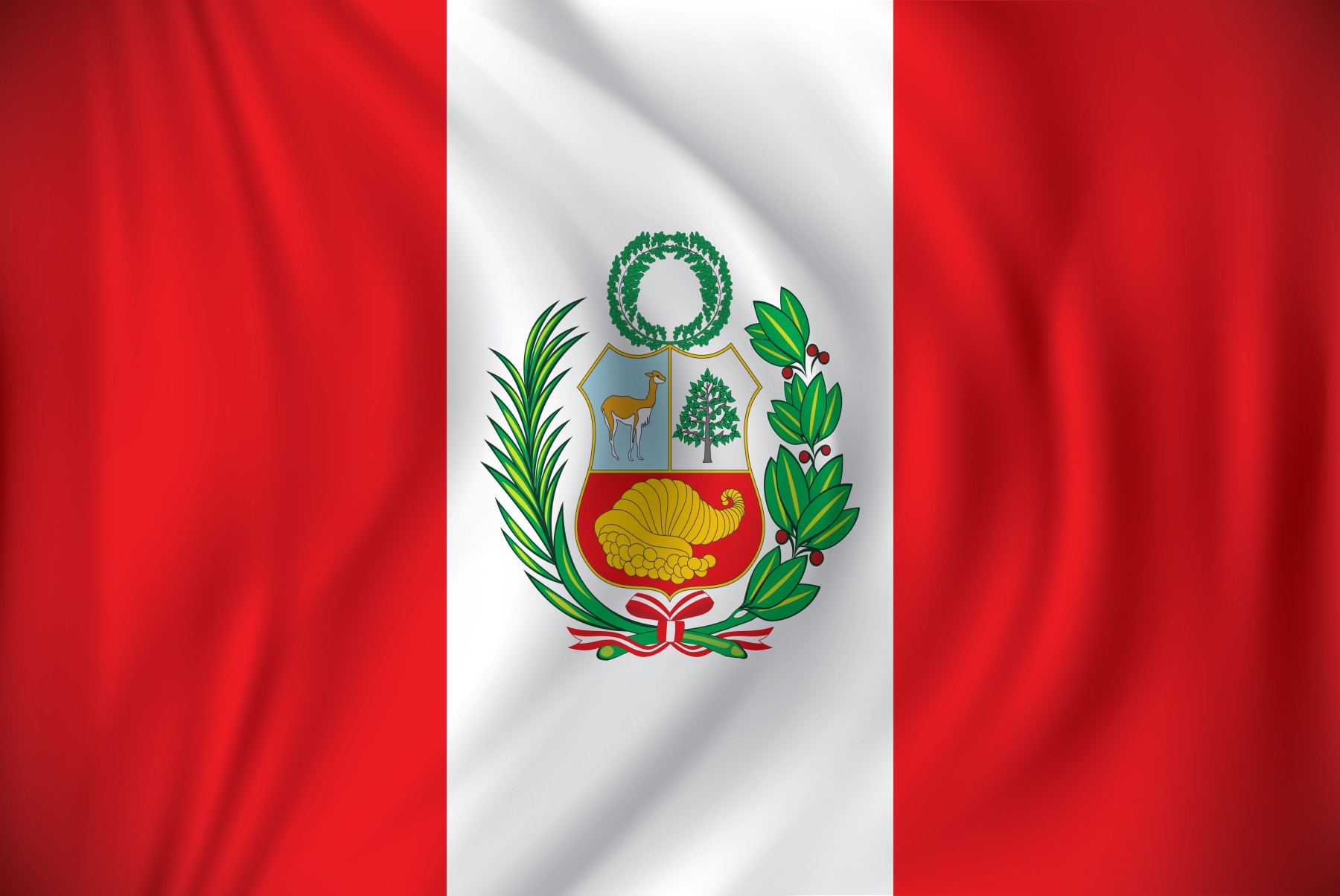
As of March 2024, the estimated population of Peru is 34,352,719.
The currency in Peru is the Peruvian Sol (PEN). The currency symbol is S/.

According to Peru's labor law, paid work is automatically deemed an employment contract, granting an employee all the statutory rights and benefits of a permanent employee. Unless a written contract specifies a different type of agreement, it is assumed to be for an indefinite term.
Peru does not require that all employment contracts be made in writing. Contracts for an indefinite period can be concluded orally or in writing. All employment contracts must include information on the nature of the job and remuneration. Employment agreements for a fixed-term, a specific job, or temporary work must be concluded in writing. During the employment contract's term, employees are prohibited from competing with their employer in the same line of business, as this is regarded as a serious violation. However, once the contract ends, there are no restrictions on this matter.
Peru's labor law allows the use of temporary work contracts to address changes in market needs, business reorganization, or seasonal work. The employment contract must be in writing and clearly state its purpose is temporary hiring. Temporary contracts made to meet changes in market needs, such as a surge in demand, can last a maximum of 6 months per year. Temporary employment agreements for business reorganization may last a maximum of 2 years. Seasonal contracts are agreements designed to cover work during a specific time of the year and are often renewed annually for the same period. Employers must register temporary contracts with Peru's Ministry of Labor within 8 days of signing.
In Peru, the standard probation period is 3 months. After this, employees are protected against unfair dismissal. A longer probation period can be agreed upon if the job requires additional training, responsibility, or adaptation. This extension must be in writing and cannot exceed 6 months for qualified or trusted positions or 1 year for business directors and officers.
Peru's labor law stipulates the standard workweek is 48 hours and that daily working hours cannot exceed 8 hours. Employers are authorized to establish ordinary working days in agreement with the trade union. Missed work due to a holiday can be compensated with additional hours during the following week or at another mutually agreed upon time. Adolescents aged 14 may work up to 4 hours per day and 24 hours per week, while those aged 15 to 17 are limited to 6 hours per day and 36 hours per week. Adolescents under 18 are prohibited from working between the hours of 7:00 PM and 7:00 AM.
2026
2027
According to Peru's labor laws, to be eligible for annual leave, employees must complete 1 year of service with the employer. Employees who work for 6 days a week must have worked for at least 260 days in a year, and employees who work for five days in a week must have worked for at least 210 days in a year. Employees are entitled to at least 30 calendar days of paid annual leave. Employers should note that the 30 calendar days include weekly rest days, public holidays, and other non-working days. The annual leave can be reduced from 30 to 15 days by providing compensation for the 15 days. The employee is to be paid their regular compensation for the leave period. Annual leave compensation is to be paid before the start of the employee's annual leave.
According to Peru's labor code, employees are entitled to 20 days of sick leave fully paid by their employer. If an illness continues beyond this period, qualified employees can receive payments from the National Social Security Fund (ESSALUD) starting on the 21st day. After a 1-day waiting period, they are eligible to receive 100% of their average daily earnings from the past four months. This benefit can last up to 11 months and 10 days consecutively or up to 540 nonconsecutive days within a 3-year period. To qualify for the social insurance sick leave benefit, most insured persons must have 3 consecutive months of contributions or 4 nonconsecutive months within the 6 months before the month in which the disability began. Fishing employees must have 2 consecutive or nonconsecutive contributions paid in the 6 calendar months before the month in which the disability began. Insured independent artisanal fishermen and fish processors must have 3 consecutive monthly contributions paid. Accidents automatically qualify for social insurance as long as the employee is affiliated when the accident occurs.
In Peru, pregnant employees are entitled to 49 days of paid leave before delivery and 49 days after delivery. For multiple births or births with a disability, the maternity leave is extended by 30 calendar days. If the delivery occurs before the expected date, the remaining days are added to the postnatal rest. Qualified insured employees receive 100% of their average daily earnings over the last 12 months, up to a maximum earnings level, for all 98 days. If contributions were made for less than 12 months, the average will be determined based on when contributions began. The benefit is extended for multiple births or the birth of a child with a disability. To qualify for maternity benefits from the state social insurance fund, mothers must have at least 3 consecutive months of contributions or at least 4 months of contributions in the 6 months before the month in which their benefits begin. Agricultural workers must have at least 3 consecutive months of contributions or at least 4 months of contributions in the 12 months before becoming pregnant. Also, they must have contributed during the month in which the child is born. Employers are prohibited from terminating a pregnant employee during the pregnancy or within 90 days from the end of maternity leave.
According to Peru's law, employees have the right to 10 calendar days of paternity leave in instances of natural birth or cesarean section. For premature and multiple births, the leave is increased to 20 calendar days. For births resulting in terminal congenital disease, severe disability, or serious complications to the mother's health, paternity leave is 30 calendar days. Paternity leave starts from the day of birth or 3 days before the date of birth. Employees must inform their employers of this leave at least 15 days before the expected date of delivery. Paternity leave cannot be substituted with compensation.
Peru's labor law requires employers to give employees written notice of at least 6 calendar days in cases of dismissal due to conduct and a notice period of 30 calendar days for cases of dismissal due to lack of employee capacity. The employer notification letter must specify the cause of dismissal and the date of the effective termination. Employees need to provide 30 days' notice if they terminate their contract.
According to Peru's labor law, employees who are justifiably dismissed for their conduct or capacity are not eligible to receive severance compensation. In cases of unfair dismissal, employees are entitled to severance compensation of 1.5 months' salary for each year of service, up to a maximum of 12 payments. For partial years, the severance pay is calculated proportionally based on the months (1/12) and days (1/30) worked. However, severance compensation is not provided in cases of collective dismissal. In addition, a special payment must be made to the employee upon the termination of the employment contract, regardless of the cause for termination. This payment, called "Compensación por Tiempo de Servicio," is equivalent to 1 monthly average salary per year of service. This amount is deposited to a bank chosen by the employee each year.
Peru’s retirement system is built around a multipillar structure that combines both public and private administration, bringing together the country’s existing pension programs under one broader framework. Within the SIPP (Sistema Integral Previsional Peruano), the National Pension System (SNP) and the Private Pension System (SPP) remain the main contributory pension options. Workers are also allowed to move freely between the SNP and SPP depending on their needs and preferences. The SNP is a public system where contributions are pooled. Pensions are based on years of contribution and average earnings. Employees can retire at age 65 or early at 55 with at least 25 years of contributions, though the pension is reduced by 4% per year for early retirement. The SPP, managed by private administrators, involves individual accounts that grow through monthly contributions and profitability, with optional voluntary contributions. The retirement age is 65 years without the requirement of minimum contribution periods. Early retirement is also available in the SPP, provided the individual is at least 55 years old and certain other conditions are met.
The National Pension System (SNP) covers survivors' pensions for widow(er)s, children, and parents of the deceased insured member. The maximum pension amount for a spouse is 50% of the disability or retirement pension to which the deceased was entitled. The pension ends if the survivor remarries. The deceased's children are entitled to a pension of 50%. Parents of the deceased insured person are entitled to a pension of 20%, provided that they are disabled and of retirement age or were economically dependent on the deceased. Under the SPP system, survivors who are nominated by the deceased employees are eligible to receive a pension upon their death. Beneficiaries include widow(er)s, children, and parents of the deceased insured member. The pension amount is based on the deceased's average monthly earnings in the last 48 months before death. The maximum pension amount is 42% of the decedent's pension. Employees enrolled in the SNP must contribute 13% of their gross monthly earnings, while those enrolled in the SPP must contribute 1.37% of their earnings to the invalidity and survivors pension system. Employers are not required to make contributions to the SNP or SPP invalidity and survivors pension system.
The National Pension System (SNP) covers disability pensions for those insured members who are permanently disabled, mentally or physically, and whose earning capability has been reduced by more than 66.67%. The amount of the disability pension is equal to 50% of the standard remuneration of the employee. An additional bonus is paid if constant care is required. Under the SPP system, insured employees who have lost at least 50% of their ability to work and who are not receiving an old-age pension are eligible for disability benefits. The pension for partial disability (50% to 66.67%) is 50% of the insured's average remuneration and the pension for full disability (greater than 66.67%) is 70% of the insured's average remuneration. Employers are not required to make contributions to the SNP or SPP disability and survivors insurance. Under SPP however, employers are required to contribute 5% of gross payroll for fishermen, 1% for construction workers, and 2% for miners.
Peru imposes income tax on all individuals earning income from Peruvian sources, whether they are domiciled or not. Peruvian income tax rates range from 8% to 30% and are based on tax units set each year by the Tax Administration. For 2026, a tax unit is set to PEN 5,500 (Peruvian soles). Peruvian tax residents are entitled to a deduction equivalent to 7 tax units from their gross income. For non-domiciled employees, income tax is imposed at a flat rate of 30% on their gross Peruvian-sourced income. No deductions or credits apply to non-domiciled individuals.
Peru offers temporary visa categories for international business activities, including Artistic/Sports, Special Events, Training/Short-Term Research, Temporary Work, Business, Journalism, and Tourism visas.
For business activities, the business visa allows foreign nationals to engage in legal, contractual, or technical assistance activities for up to 183 days within a year but is non-extendable. Additionally, Peru has agreements with certain countries that allow nationals to enter for business without a visa, with varying stay durations (e.g., Brazil, Colombia, Mexico, and European Union countries allow up to 90-183 days).
Notably, nationals from China and India can also avoid a business visa if they hold a valid visa or permanent residency from the U.S., Canada, the U.K., Australia, or the Schengen Area.
Foreign nationals who wish to work in Peru under an employment contract must obtain a residence permit. The Ministry of Labor will grant a work permit after approving the employment contract. This type of permit is valid for 1 year and can be extended for the same duration. The following list includes some important documents that must be submitted to obtain the work permit: Application form signed by the employer Payment receipt for the fee Copy of passport or travel document (valid for at least 6 months) Notarized copy of the employment contract in Peru Employer's taxpayer registration document Notarized copy of the employer's power of attorney and most recent form of ID The employee must be registered with Peru's Tax Administration (SUNAT) Employers should also consider that any information presented in a foreign language should be translated to Spanish. The required documents have specific validity periods, with some needing to be no older than 3 or 6 months.
