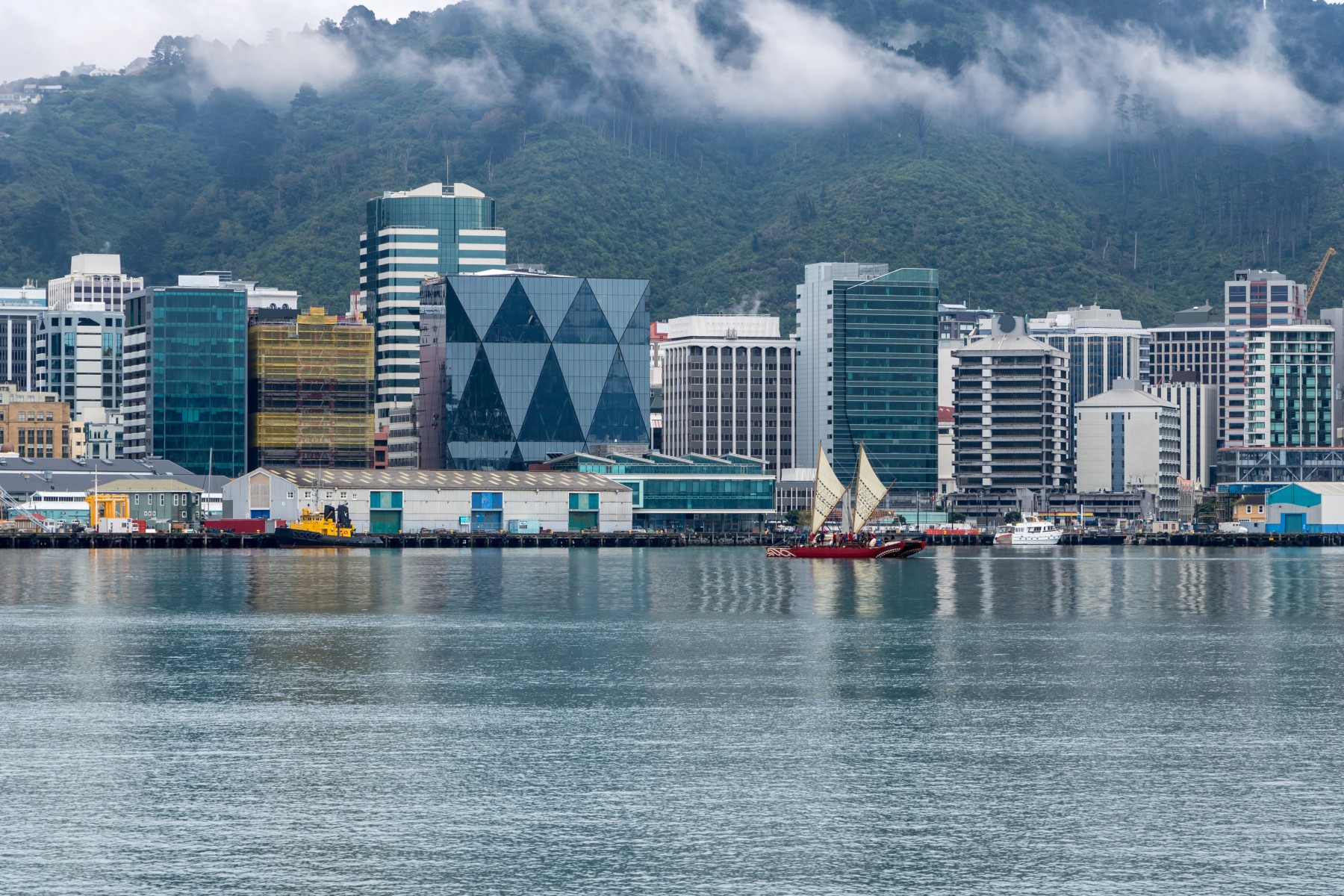

As of March 2024, the estimated population of New Zealand is 5,228,100.
The currency in New Zealand is the New Zealand dollar (NZD). The currency symbol is $.

Permanent employees in New Zealand have a full set of employment rights and responsibilities. They are entitled to parental leave, parental leave payments, and annual, sick, and bereavement leave. They can be full-time or part-time workers. Full-time permanent employees work the standard number of hours over 5 days per week. Part-time permanent employees regularly work a lesser number of hours or days per week.
In New Zealand, employment contracts must be in writing. Failure to follow this requirement can result in a fine of NZD 1,000 (New Zealand dollars) per employee for the employer. Effective February 21, 2026, at the time an employee enters into an individual employment agreement, the employer must inform the employee that a relevant collective agreement exists and covers the work to be performed, that the employee has the right to join the union party to that agreement, how to contact the union, and that joining the union will bind the employee to the collective agreement, and must also provide a copy of the collective agreement. If the employee consents, the employer must also notify the union as soon as reasonably practicable that the employee has entered into an individual employment agreement. An employment contract must include the contracting parties' names, a description of the work, place of work, hours of work, remuneration, overtime pay, probation, trial period, fixed-term or permanent nature of employment, etc. Minimum rights (such as the minimum wage, annual holidays, sick leave, bereavement leave, overtime pay, etc.) are legal requirements and apply even if they are not specified in the employment agreement.
In New Zealand, a fixed-term (temporary) employment contract will end on a specified date or when a particular event occurs, such as: Replacing another employee on parental leave Covering a seasonal peak Completing a project Working temporarily for another employer/department while still being employed by the primary employer (triangular employment) Employers can hire temporary employees through agencies. These workers are employees working under a triangular employment contract. They are employed by an employer (the agency) but work under another business or organization that directs or controls their day-to-day work (the controlling third party). Under a recent amendment to the Employee Relations Act, temporary employees in a triangular contract can take a personal grievance against the controlling third party and their direct employers. The law also recognizes casual employees hired on a short-term basis for no guaranteed work hours, no regular work pattern, and no ongoing expectation of employment. Every time the employee accepts an offer of work in this arrangement, the engagement is treated as a new employment period. A casual employment agreement must outline the details of an employee’s work hours, making clear that there is no guarantee of work on a specific day and that the amount of work will fluctuate.
An employer may require an employee to serve a probationary period after joining. This must be specified in the employment contract. A probationary period is used to assess an employee's skills in a new job or role (if they are already working for the employer). There are no limits on the duration of probationary periods. If the employer finds the employee's work unsatisfactory at the end of the probationary period, they can dismiss the employee by providing justified reasons. They must give notice before dismissal. Employees have the right to challenge dismissal after probation on the grounds of unjustified dismissal. New Zealand allows trial periods if agreed upon by both the employee and employer in the employment agreement before the employee starts work. Otherwise, they are invalid. The employment agreement must specify that: The employee will be on a trial period at the start of their employment, lasting no more than 90 days (but it can be shorter). The exact duration must be stated (e.g., 30 days or 90 days). The employer can dismiss the employee during the trial period. The employee cannot bring a personal grievance or legal action regarding their dismissal.
Working hours are determined by employment contracts, but they must not exceed 40 hours per week (excluding overtime). If the maximum number of hours is less than 40, then the work must not exceed five days a week. Employees under 16 years of age cannot be employed between 10:00 PM and 6:00 AM on any day. If an employee or employer wants to change work hours, both should agree to this in writing in the employment agreement. Under special circumstances, working hours can be increased by giving reasonable notice to employees. Working hours may be reduced as an alternative to redundancy in some situations, such as genuine financial, commercial, or economic problems or genuine business restructuring.
2026
2027
In New Zealand, employees are entitled to a minimum paid annual leave of four weeks. Employees become eligible for this leave once they have completed 12 continuous months of service for the employer. Once the employee completes 1 year of service, employers can choose to grant them all of their annual leave at once, or they can allow the employee to accrue leave as they work so that it adds up to 4 weeks at the end of each year. Annual leave must be taken within 12 months after the date on which the employee becomes entitled to leave. An employee may request that their employer pay out a portion of the employee's entitlement to annual leave. This request must be made in writing and can be made for a maximum of 1 week a year. Annual leave is paid at either the employee's ordinary weekly pay at the beginning of the annual leave or the employee's average weekly earnings for the 12 months just before the end of the last pay period preceding the annual leave, depending on whichever is higher. Employees may request 1 week of their 4-week minimum annual holiday entitlement each year to be paid in cash. Alternatively, some employees may receive their annual holiday pay on a pay-as-you-go basis if the employee: Has a fixed-term contract of less than 12 months, or Works so irregularly that providing 4 weeks of annual leave is not practical.
Sick leave in New Zealand is paid time off work if an employee, their spouse, partner, dependent child, or any other person who depends on them is sick or injured. All employees (including part-time and casual employees) are entitled to 10 days of sick leave if they have worked for 6 months for the same employer. For every 12 months after this, each employee gets at least 10 days of sick leave. Employees must inform their employers of sick leave as soon as possible. Proof of sickness is required if the employee is sick or injured for more than 3 consecutive days. Sick leave is paid at the employee's normal wage rate. Unused sick leave cannot be paid in cash or be part of any final payment to the employee when they leave unless agreed to in the employment agreement. Unused sick leave can be carried over and added to the next year's entitlement, up to a maximum accumulated leave of 20 days. If an employee runs out of sick leave in a year, they can request advance sick leave, and use annual leave or unpaid leave.
New Zealand does not have maternity leave. It provides different types of leaves that can be shared among partners under parental leave. Employees who have worked for an employer for at least 6 months are eligible for parental leave. The following types of leave are available at the time of a child's birth: Primary Carer Leave - This is a paid leave of 26 weeks duration available to a pregnant employer, her spouse, partner, or whoever is the primary caregiver for the child. The employee can start their primary carer leave up to six weeks (or earlier with the employer's consent) before the due date. All employees receive a government-funded payment of NZD 811.05 (New Zealand dollars) per week for 26 weeks. Special Leave - This is ten days of unpaid leave for pregnancy-related reasons such as antenatal classes, scans, or doctor/midwife appointments. Extended Leave - This is an unpaid leave of up to 52 weeks to be shared by both parents, depending on the number of months they have worked for their employers. Negotiated Carer Leave - This is an unpaid leave of 26 weeks for employees who have worked for less than 26 weeks with the same employer. Employees must inform their employers in writing of their intention to take parental leave at the time of a child's birth at least 3 months in advance.
In New Zealand, partners are eligible for unpaid partner's leave of one week if they have worked for 6 months with the employer and 2 weeks if they have worked for 12 months. This leave must be taken within the timeframe starting 21 days before the baby's due date and ending 21 days after birth. Employees must inform their employers in writing of their intention to take parental leave at the time of the birth of a child at least 3 months in advance. An employee cannot take a partner's leave in the following circumstances: She is the biological mother, and she has transferred her parental leave payment entitlements to her spouse or partner. The employee is the partner or spouse of the child's biological mother, and the biological mother has transferred her parental leave payment to the employee. A pregnant employee can also choose to transfer her 26 weeks of primary carer leave to her spouse or partner. In this case, the leave is to be taken continuously and immediately after childbirth. Such partners also receive the benefits of the primary carer leave and receive weekly benefits in the amount of NZD 811.05.
There is no legal limit on notice for dismissal in New Zealand. A notice period is agreed upon in the employment contract. If the employment agreement does not have a notice period, fair and reasonable notice must be given depending on the years of service, role, type of job, and common practice in the industry. The notice period is usually 2 - 4 weeks. The notice must be given in writing and is usually the same for employees and employers. The employer can choose to agree with the employee to waive all or some of their notice period if the employee requests or consents to it. Giving Notice: If an employee gives the required notice, the employer must pay them until the end of the notice period. The employer may ask the employee not to work the full notice period if: The employee agrees, or The agreement includes a clause allowing payment instead of working the notice period. Even if the employee doesn’t work the full notice period, they must still be paid for it. However, if the employee and employer agree to waive part of the period, they are only paid for the days worked.
There are no provisions for mandatory severance benefits in New Zealand. At the time of the contract termination, employees are entitled to a "final pay" that includes pending salary, allowance for annual leave and public holidays, and other payments owed to them. Employers can provide redundancy compensation if it is agreed upon in the employment agreement. If an employment agreement doesn't mention any such clause, an employee isn't legally entitled to redundancy pay. When employment is ending due to redundancy, employees must be given notice according to the contract terms.
There is no legal retirement age in New Zealand, although superannuation benefits start at 65 years of age. New Zealand has 2 types of retirement schemes. New Zealand Superannuation (NZ Super) is a universal government-funded, non-contributory benefits scheme for citizens and permanent residents who have reached 65 years of age and have lived in New Zealand for at least 10 years (gradually increasing to 20 years by the year 2042, becoming 11 years on July 1, 2024, and then increasing by 1 year every 2 years. The benefit amount depends on whether the applicant is single, married, or in a relationship. Whether the applicant receives any overseas benefit or pension is also considered. To qualify for NZ Super or Veteran's Pension, you must be 65 or older and have lived in New Zealand for 10 to 20 years, depending on your date of birth. At least 5 of those years must be after age 50, and they don’t need to be consecutive. Other criteria: Be a New Zealand citizen, permanent resident, or hold a residence class visa. Be living in New Zealand, the Cook Islands, Niue, or Tokelau at the time of application. The KiwiSaver scheme is a voluntary work-based savings scheme. Employees are automatically enrolled if they are aged between 18 and 65 and start working with a new employer. The KiwiSaver account savings can be withdrawn by persons when they turn 65 years old and have paid for at least 5 years. Contributions are made by employees, employers, and the government.
New Zealand offers a universal social security benefits scheme for children under 18 years of age whose parents have died, can't be found, or can't look after them because they have a long-term health condition or incapacity. This benefit is paid to a carer supporting the child. Widows receive Jobseeker Support benefits if they were eligible for the Widows Benefit before July 15, 2013, at the rate of NZD 384.52 per week. Funeral benefits are paid at a maximum of NZD 2,697.43 for those with annual income less than the defined threshold. The Accident Compensation Corporation (ACC) provides financial support to survivors and dependents if someone dies from an injury or accident. The spouse or partner, children, and other dependents are eligible for this benefit. The lump sum benefit is paid as follows: NZD 8,566.62 to the spouse or partner NZD 4,283.32 to each child under 18 or other dependents. Surviving partners or dependent children of a deceased veteran may also be eligible to receive a tax-free one-time payment of NZD 7,580.60 to help with funeral costs. Eligibility applies if the veteran: Was receiving a Veteran's Pension at the time of death, Had either: A war disablement pension of 70% or more under the War Pensions Act 1954, or A disablement pension of 52% or more under the Veterans' Support Act 2014, Lived in New Zealand when they died.
New Zealand has a universal social benefits scheme, the Supported Living Payment, for persons who are unable to work due to disability. It is also provided to persons who care for others with a health condition, injury, or disability. The benefit amount depends on the beneficiary's marital status and whether or not they have children. A weekly disability allowance of NZD 82.85 is paid for people eligible for the Supported Living Payment for regular, ongoing costs due to a disability, such as visits to the doctor or hospital, medicines, extra clothing, or travel. Benefits for injury or disability due to work-related or non-work-related accidents are covered by the Accident Compensation Corporation (ACC). ACC covers injuries ranging from sprains to permanent disability, but not general illnesses, diseases, infections, age-related health conditions, non-work-related gradual process injuries, or mental injuries. Employers and employees pay the contributions for ACC, depending on their risk of injury at work, claims history, and income. It pays up to 80% of the employee's average earnings for temporary disability. In case of permanent disability, employees are eligible for a one-off or an ongoing payment, depending on the degree of disability. Effective April 1, 2026, the ACC Earners' Levy rate is 1.75% of liable earnings. The maximum liable earnings for the levy are NZD 156,641, giving a maximum annual ACC Earner's Levy of NZD 2,741.22.
The tax year runs from April 1 to March 31 of the next year in New Zealand. Residents are taxed on their worldwide income, while non-residents are taxed only on their income from New Zealand sources. The following persons are considered residents: Those who have a permanent place of residence in New Zealand Those who are present in New Zealand for more than 183 days in a 12-month period. Personal income tax rates are progressive and range from 10.5% to 39%.
New Zealand has the following categories of visas:
New Zealand also has a number of visa categories under 'open to work visas', meaning they can work for almost any employer, in any job or location in New Zealand, without needing a job offer. From April 20, 2026, open work visas include the following conditions:
Foreign nationals who wish to work in New Zealand require a work visa. There are different categories of work visas available: Accredited Employer Work Visa (AEWV) - The AEWV is issued to foreign nationals who have a valid job offer for a full-time position from an employer accredited by Immigration New Zealand. The visa allows the holder to work in New Zealand for a specified employer, role, and duration. The length of the visa depends on the job, skill level, and pay, and is issued for a maximum of 5 years. AEWV jobs must pay at least the market rate for the job. The median salary effective March 9, 2026 is NZD 35 per hour. Working holiday visa - This visa is for individuals aged either 18 to 30 or 18 to 35, depending on their citizenship. It is valid for up to 12 months or 23 months (only for people from select countries). Applicants must have enough money to pay for a return ticket and have come mainly to holiday, with work being a secondary intention. They cannot take up a permanent job. The following documents are required to apply for a work visa: Proof of job offer Proof of identity and good character Passport and photo Medical certificate There are different categories of work visas that allow employees to stay temporarily for periods ranging from 2 to 5 years, or to apply for permanent residence after working for 2 years or 30 months.
