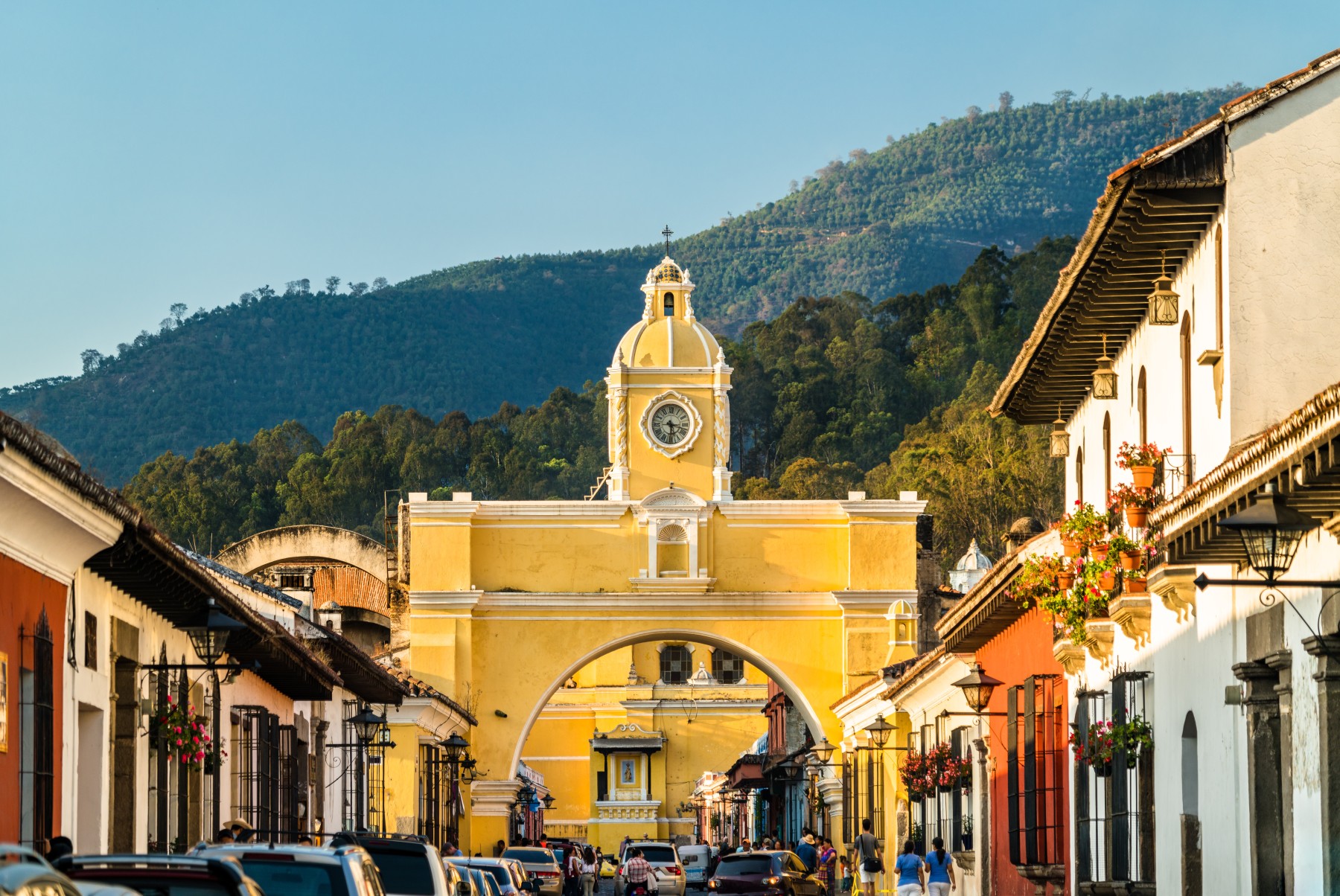
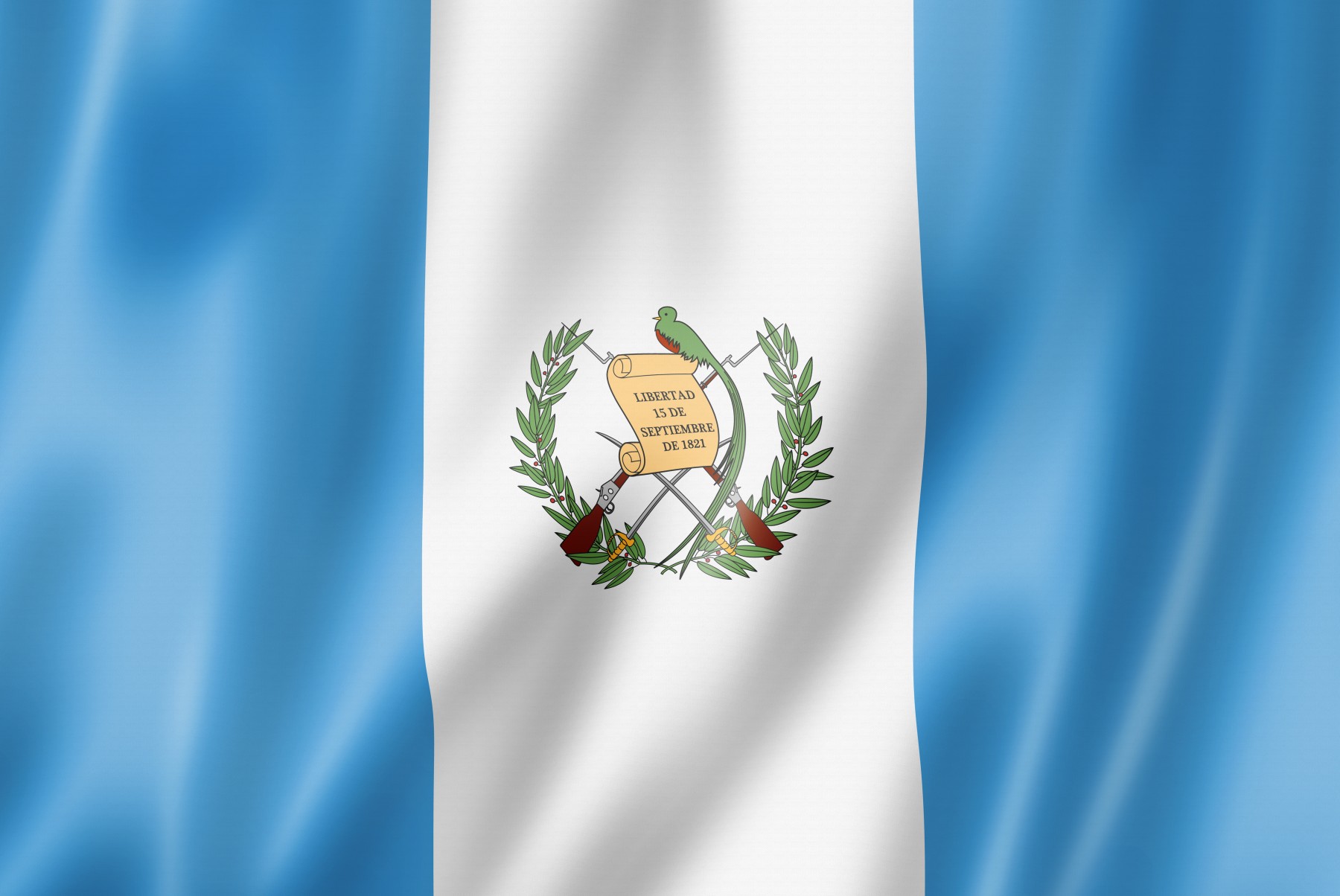
As of March 2024, the estimated population of Guatemala is 18.4 million.
The currency in Guatemala is the Guatemalan Quetzal (GTQ). The currency symbol is Q.

All individual work contracts are considered to be made for an indefinite period unless expressly stated otherwise. An employee who performs activities that are permanent or continuous in a company must be signed to an indefinite-term agreement. Such contracts can be terminated at any time by giving a notice to the other party. Consequently, fixed-term contracts and contracts for specific works are exceptional and can only be concluded in cases where the accidental or temporary nature of the service so requires.
In Guatemala, an individual work contract may be verbal when it refers to: Agricultural or livestock work Domestic service Temporary or incidental work not exceeding 60 days For the performance of a specific job, provided that its value does not exceed GTQ 100 (Guatemalan quetzales). In all other cases, the contract of employment must be in writing and must contain information on the identity of parties, duration of agreement, working hours, salary and benefits, nature of work,etc.
The Labor Code of Guatemala offers no general regulation of temporary work agency employment. However, Article 5 of the Labor Code defines an intermediary as a person who hires one or more workers to perform activities for a third party (patrono). The third party is jointly and severally liable with the intermediary for the management of said employees in reference to their labor rights and obligations granted under the Constitution, Labor Code, internal manuals, and other applicable regulations. The number of renewals and extensions of temporary work assignments is not restricted. Restrictions and renewals depend on what the parties agree upon privately.
According to the Labor Code, for contracts of indefinite duration, the first 2 months are considered a probationary period (although the parties can mutually agree to a shorter probation). During this period, either party can terminate the employment contract with or without cause, without any responsibility on their part. A probationary period cannot be extended.
Per the labor law, regular working hours are 8 per day and 44 per week (the standard workweek is six days). In case of mixed work day (day and night work), working hours cannot exceed 7 hours per day and 42 hours per week. In case of night work, working hours cannot exceed 6 hours a day or 36 hours a week. The total working hours, including overtime, may not exceed 12 hours daily. Employees who work beyond the standard working hours are entitled to overtime pay at 150% of the regular hourly rate. Work performed beyond the limits provided by the contract between the parties is also considered overtime work and must be remunerated as such.
2026
2027
In Guatemala, the labor law grants an employee 15 consecutive working days of paid annual leave after completion of 12 months of continuous service with the same employer. The employee must have worked at least 150 days in the year of service to be entitled to leave. Annual leave pay must be issued to the employee before the start of the leave. Workers must enjoy their vacation period without interruptions and are only obliged to divide them into 2 parts at most. Leave days are not cumulative from year to year. Employees cannot apply unused leave to the following year. However, at the termination of the contract employees can claim compensation in cash for leave that has been omitted in the last 5 years.
Guatemala's labor law stipulates that an employment contract is suspended during an employee's sickness. Workers are entitled to paid sick leave for up to 6 months, provided that the insured employee has at least 4 months of contributions in the 6 months before the sickness begins. The benefits are provided by the Guatemalan Social Security Institute (Instituto Guatemalteco de Seguridad Social) from the fourth day of the temporary suspension of work. Two-thirds of a worker's average earnings is paid as a sickness benefit up to a maximum of 180 days (the benefit may be extended for 39 weeks). The maximum combined benefit for multiple periods of incapacity is 52 weeks in a 24-month period. The Guatemalan Social Security Institute also sets a maximum monthly benefit.
Under the Labor Code of Guatemala, pregnant female employees are entitled to a maximum of 12 weeks (84 days) of maternity leave, including 30 days of prenatal leave and 54 days of postnatal leave. An employee is entitled to receive her full salary while on maternity leave from the Guatemalan Institute of Social Security, provided she has paid contributions for 4 months in the 6 months preceding the prenatal leave and she is not engaged in any other paid work during the period of leave. If an employee is not registered with the Social Security Institute, the employer pays the full salary.
The Labor Code of Guatemala provides 2 days of fully paid paternity leave for the birth of a child. No qualifying conditions are stipulated regarding the entitlement to paternity leave.
In Guatemala, the length of a statutory notice period for termination of an indefinite contract is based on the employee's duration of service. 1-week notice for service under 6 months 10 days' notice for more than 6 but less than 12 months of service 2 weeks' notice for more than 1 year but less than 5 years of service 1-month notice for 5 or more years of service The notice period listed above applies to workers who wish to terminate a contract for an indefinite period without just cause once the trial period has elapsed. These notice periods are not binding on employers and are superseded by a notice period stipulated in an employment contract. If an employer has to terminate an employee due to just cause or misconduct, a written dismissal notice must be provided to the employee before termination.
The Labor Code stipulates that an employee dismissed for just cause is not entitled to severance pay. The employer has the burden of proving that the dismissal was justified. Employees dismissed without cause or indirectly are entitled to severance pay equal to 1 month of salary per year of service. Severance must be paid proportionally when the employee works for a part of a year. Employees are not eligible for a severance payment if dismissed during a probationary period.
In Guatemala, the Social Security Institute (Instituto Guatemalteco de Seguridad Social) administers pensions and social benefits to employees of firms with at least three workers, individuals employed in freight or passenger transport enterprises with at least one worker, and public-sector employees not covered by a specialized system. The retirement age is 60 years. Employees who have reached retirement age and have paid at least 240 contributions are entitled to an old-age pension. Those with less than 240 contributions but with at least 12 contributions are entitled to the old-age settlement benefit as a lump sum. There is an Economic Contribution Program for the Elderly, where the government pays a social pension to those who have turned 65 years old, have low income or disability, and have no other pension. This scheme is funded through contributions from high-income individuals and companies.
A widow or disabled widower entitled to a survivors pension will receive 50% of the old-age or disability pension the deceased received or was entitled to receive. The minimum monthly widow(er)'s pension is GTQ 170 (Guatemalan quetzales). Each eligible child younger than age 18 (no age limit if disabled) will receive 25% of the old-age or disability pension the deceased received or was entitled to receive; 50% if both parents are deceased. The minimum monthly orphan's pension is GTQ 85; GTQ 170 if parents are deceased. A dependent parent will receive 25% of the old-age or disability pension the deceased received or was entitled to receive. The minimum monthly dependent parent's retirement is GTQ 85. The minimum combined monthly survivor pension is GTQ 340. The maximum combined survivors pension is 100% of the old-age or disability pension the deceased received or was entitled to receive.
In Guatemala, the social insurance system provides benefits for disabled workers, whether their injury is occupational or non-occupational. To be eligible for benefits, the insured must have contributed for at least 36 months in the last 6 years immediately before disability. There are 2 types of disabilities recognized for benefits, depending on the degree of disability: Total disability - If the insured is unable to obtain a remuneration greater than 33% of what is usually received in the same region by a healthy worker, with similar capacity, category and professional training. Severe disability - If the insured is unable to obtain remuneration and permanently need the help of another person to perform the acts of ordinary life. The disability pension is initially granted for 1 year and continued depending on annual evaluation. The disability pension is not payable abroad. It ceases at the regular retirement age and is replaced by an old-age pension. It also ends if the pensioner recovers the ability to work. Benefits are also provided for work-related and non-work-related accidents or occupational diseases. For cash benefits, the insured must have at least 3 months of contributions before the work injury or occupational disease began. For medical benefits, there is no minimum qualifying period if the insured is in covered employment; unemployed persons must have at least 3 months of contributions in the last 6 months before the work injury or occupational disease began.
Employees with an annual income above GTQ 300,000 (Guatemalan quetzales) are taxed at 7%. Employees with an annual income of less than GTQ 300,000 pay tax at a rate of 5%. Non-residents are taxed at a flat rate of 15% on income sourced in Guatemala.
In Guatemala, foreign nationals are classified according to their nationality into 3 categories that determine whether a visa is required and how it is issued (A, B, and C).
Visa Types and Validity
Guatemalan visas may be single-entry or multiple-entry:
A foreign national who wishes to work in Guatemala must obtain both a work permit and a residence permit. Most non-immigrant visas for temporary workers offer renewal periods. The initial stay can be 2 or 3 years, depending on the type of work, and can usually be renewed once. The work permit is valid for renewable periods of 1 year. A request for an extension must be filed 15 days before the expiration of the period for which the work permit is issued. Before obtaining a work permit, an applicant must request a temporary residence permit. Temporary residence is granted for a period of 1 to 5 years, according to the application submitted by the foreign national and the decision of the Guatemalan Migration Institute. A temporary residence permit can be extended. However, if a person wants to stay in Guatemala for a period longer than 5 years, they must apply for a permanent residence permit. Effective October 7, 2025, foreign remote workers who are employed by foreign businesses may legally reside in Guatemala for 1 to 5 years. Workers must prove an income of at least USD 2,000 (United States dollar) per month in the prior year, or USD 3,000 if they have dependents.
