
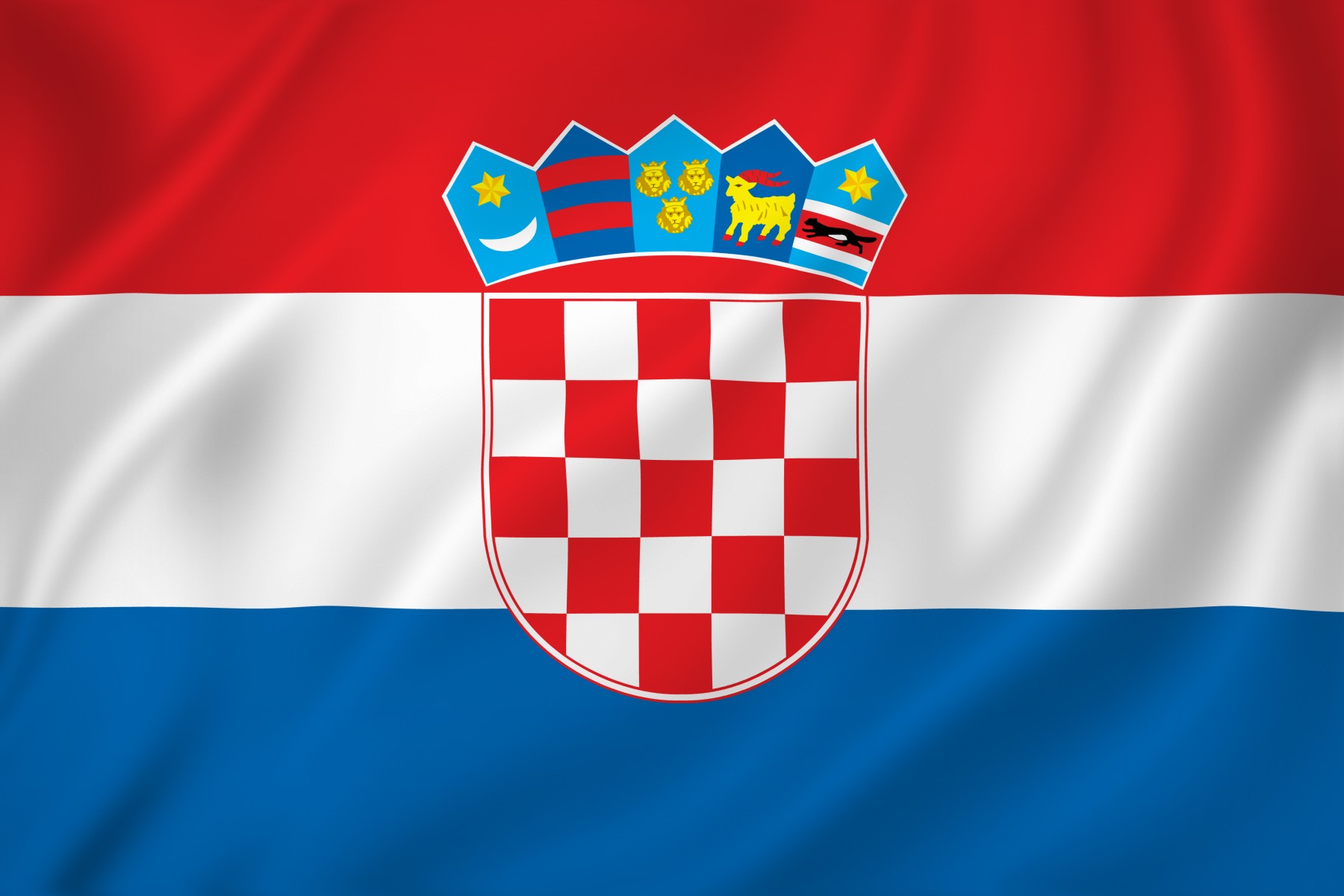
As of March 2024, the estimated population of Croatia is 4,008,617 people.
The currency in Croatia is the Euro (EUR). The currency symbol is €.

In Croatia, there are no special provisions that further highlight the definition of permanent employment. However, employment contracts are concluded for an indefinite period of time unless otherwise stipulated by the labor law and binds the parties until it is terminated. If an employment contract does not specify the time for which it was concluded, it is considered to have been concluded for an indefinite period.
The labor code of Croatia mandates that employment contracts be concluded in writing. However, the failure to conclude an employment contract in writing does not impact the existence or validity of the employment contract. If the employer does not put an employment contract in writing, it is considered to be a contract for an indefinite period. Employers who conclude contracts with seasonal employees, employees sent abroad for work, or employees working from home must include additional mandatory terms in writing. Employers can include a non-compete clause in employment contracts, which must be agreed upon in writing, either within the employment contract or in a separate document. These restrictions cannot exceed 2 years. The clause is not binding if the employer does not agree to pay the employee at least 50% of their average monthly salary from the last 3 months of employment, for the duration of the restriction. If the employee violates the non-compete clause, the employer can seek compensation for any damages incurred.
According to the labor code of Croatia, an employer can conclude a temporary employment agreement for a fixed or indefinite term. This contract must include the following information: Specify that the contract is for a temporary position Specify the nature of the job assigned to the employee Place of work Start date and end date for fixed-term contracts Salary, wages In 2014, Croatia amended its labor code to improve the working conditions of employees who seek temporary employment through agencies by ensuring equality for temporary employees and other employees doing the same job at the same organization.
In Croatia, the parties to an employment contract may agree to a probationary period of up to 6 months. The probationary period may last longer than 6 months if the employee is temporarily absent due to temporary incapacity, maternity and parental rights, or the use of paid leave. It may be extended in proportion to the duration of the absence. If a probationary period is agreed upon, the employee must be given 7 days' notice before termination. An employer has the right to terminate an employee during the probationary period if the employee's performance is not satisfactory.
Per the labor law of Croatia, the standard workweek is 40 hours, unless otherwise stated in a collective bargaining agreement. Employees who work over this number of hours are eligible for overtime. Overtime must not exceed 180 hours a year unless contractually agreed, in which case it must not exceed 250 hours. An employee may not work for more than one employer with a total working time of more than 40 hours per week except when the employee is working abroad. Part-time work is any working time below the standard 40 hours per week. An employee whose total working time is 40 hours per week, may enter into an employment contract with another employer for a maximum of 8 hours per week, or up to 180 hours per year. The existing employer with whom the employee has already concluded a contract must give written consent for such work.
2026
2027
The labor code of Croatia provides paid annual leave of at least 4 weeks to all employees. The employee is entitled to annual leave after they have worked for at least 6 months with the employer. Employees who work in harmful jobs, and minors, are entitled to 5 weeks' leave. The law does not allow compensation in lieu of annual leave. During annual leave, employees are entitled to salary compensation in the amount determined by the collective agreement, labor regulations, or employment contract, and at least in the amount of their average monthly salary in the previous 3 months. In the event of termination of employment, employers must pay compensation to the employee who has not used their annual leave in lieu of taking it.
The labor code of Croatia provides employees with 7 working days of employee-paid leave in case of serious illness. Additionally, employees are entitled to wage replacement benefits through the Medical Committee of the Croatian Health Insurance Fund (Hrvatskog Zavoda za Zdravstveno Osiguranje or HZZO) for the first 42 days of sickness, typically paid by the employer. From the 43rd day onward, the employer continues to pay out the benefits but is reimbursed by the HZZO.
In Croatia, an employed mother is entitled to maternity leave during pregnancy, childbirth, and care of a newborn child until the child reaches the age of 6 months. The employee is entitled to 100% of their salary compensation for the duration of maternity leave, which is paid from the funds of the Croatian Health Institute. Croatian law dictates that the mother must use maternity leave 28 days before the expected date of delivery and use it continuously until 70 days after birth (compulsory maternity leave). An employed mother may start taking maternity leave 45 days before the day of the expected birth.
Per the labor laws of Croatia, after the expiration of the compulsory maternity leave period, the remaining maternity leave, which lasts until the child reaches the age of 6 months, may be transferred to the child's father. An employed father is also entitled to parental leave separate from maternal leave. An employed father can use paternity leave in the period from the day of the child's birth up to the sixth month of the child's life. Effective March 1, 2025, fathers can take 20 working days for one child and 30 working days in the case of multiple births (i.e., twins, triplets, etc.). This leave is also available in case of a stillbirth, provided they take it from the day after the stillbirth. The compensation for paternity leave is 100% of the employee's salary.
The Croatian Labor Code provides that, in the case of dismissal, the employer must give prior notice to the employee in writing. The duration of the notice period depends on how long the employee has been working for the same employer: 2 weeks' notice: employed for less than 1 year 1 month: employed for 1 year 1.5 half months: employed for 2 years 2 months: employed for 5 years 2.5 months: employed for 10 years 3 months: employed for 20 years An employee whose employment contract is terminated due to employee misconduct is entitled to a notice period in the amount of half of the notice periods listed above.
An employee who is dismissed by the employer after 2 years of uninterrupted work (unless dismissed due to misconduct) is entitled to severance pay in the amount determined by the length of their previous continuous service with that employer. The severance pay may not be less than one-third of the average monthly salary earned by the employee in the 3 months before the termination of the employment contract, multiplied by each completed year of service with the same employer.
Under Pillar I of Croatia's pension scheme (there are 3 in total), the right to an old-age pension for men is acquired when they reach the age of 65 and have 15 years of pensionable service. At least 15 years of pensionable service is also required for women, but, as of 2026, women qualify for an old-age pension at the age of 64 years. The pension amount is calculated by multiplying the personal value points of the employee by the pension factor and the actual value of the benefit. The personal value points are calculated by dividing the insured worker's average annual salary earned during their working life by the average annual salary in Croatia. The pension factor for old-age and early old-age pensions is 1.0. The actual value of the benefit is determined by the Administrative Council of the Croatian Pension Institute biannually and is correlated to the consumer price index in Croatia.
In Croatia, the family members of a deceased insured person are entitled to a survivors pension if the insured person: Had completed at least 5 years of insurance contributions Had met the length of pensionable service requirements for a disability pension Was the beneficiary of an old-age, early old-age or disability pension or Was the beneficiary of the right to professional rehabilitation benefits A survivors pension after the death of the active insured person is calculated as a percentage of the invalidity pension to which the deceased would have been entitled, according to the number of family members (effective January 2023): For 1 beneficiary: 77% of the pension For 2 beneficiaries: 88% of the pension For 3 beneficiaries: 100% of the pension For 4 beneficiaries: 110% of the pension
In Croatia, an insured person is entitled to a disability pension if they have a partial or complete loss of working capacity and meet the necessary age requirements. If the insured person suffers a partial or total lack of working capacity before 65 years of age as a consequence of illness (non-occupational) or injury outside of work, they may receive an invalidity pension if the qualifying period covers at least one-third of the working life. If the insured person's disability is due to a workplace injury or an occupational disease, they acquire the right to a disability pension regardless of the length of pensionable service.
The tax year in Croatia runs from January 1 through December 31. The tax system embeds municipal taxes within the income tax rate. The rate is determined by the Municipal region in which the taxpayer lives as follows: Municipalities: Lower rate: 15% to 20% / Higher rate: 25% to 30% Cities: Lower rate: 15% to 21% / Higher rate: 25% to 31% Large cities and county seats: Lower rate: 15% to 22% / Higher rate: 25% to 32% City of Zagreb: Lower rate: 15% to 23% / Higher rate: 25% to 33% The lower tax rates apply to income up to the amount of EUR 60,000, and the higher tax rates apply to income above that. Individuals are allowed a personal deduction that is adjusted based on the number of family members.
Croatia is a member of the European Union, and of the Schengen Area, which means that third-country nationals require a Schengen visa to enter Croatia. There are the following types of visas issued:
In Croatia, study and digital nomad stays are granted through temporary residence permits, and visa-required third-country nationals must obtain a Type D long-stay visa after their temporary stay is approved. Students enrolled at a Croatian higher education institution may receive a residence permit for up to 1 year or for the duration of their study program (up to 3 years), provided they meet the eligibility requirements and, if applicable, confirm continued enrollment annually by October 31. They may work up to 25 hours per week without a separate work permit, and mandatory practical training is also permitted.
Temporary stay for digital nomads is issued for up to 18 months and may be extended once within that period. A new digital-nomad stay may be applied for only after 6 months have elapsed since the expiry of a previous one.
Employers may hire non-EU/EEA/Swiss nationals (third-country nationals) only if a stay-and-work permit or a work registration certificate has been obtained. The employee may work only for the employer, position, and under the conditions listed in the permit. Individuals from the EU, EEA, or Switzerland do not require a permit and may work freely in Croatia under EU free-movement rules. Before hiring a third-country national, an employer must obtain a positive Croatian Employment Service (HZZ) opinion and meet certain conditions, including account inflow over the preceding 12 months of at least EUR 100,000 for legal entities or EUR 40,000 for natural persons, settled tax obligations, no relevant criminal convictions or serious labor-law sanctions, and having employed at least one Croatian/EEA/Swiss national full-time on a permanent basis for the past year. Effective June 4, 2026, the employer's business account must also not have been blocked for more than 30 continuous days in the preceding 6 months. The third-country national's salary must not be lower than the salary paid to comparable workers in Croatia in the same, similar, or related occupations, and the employment contract must not contain discriminatory provisions that place the worker at a disadvantage relative to other workers in Croatia. Effective June 4, 2026, the HZZ will issue a positive opinion only if at least 20% of the employer's workforce are Croatian/EEA/Swiss nationals relative to third-country nationals; for shortage occupations, the threshold is 10%. Permits issued with HZZ involvement may last up to 3 years (aligned with the employment contract), while permits issued without a labor market test and HZZ opinion may last up to 2 years. After working for the same employer for at least 6 months, an employee may change employers within the same occupation without a new permit, provided the new employer notifies the Ministry of the Interior within 3 days, and the HZZ issues a positive opinion; the Ministry decides within 45 days. If employment ends, the employee may remain in Croatia while unemployed for up to 3 months if the permit has been held for less than 2 years, or up to 6 months if held for more than 2 years, extended by a further 3 months in cases of particularly exploitative working conditions. Where the employee requires a visa to enter Croatia, the employer must provide a financial guarantee (promissory note) equal to one average monthly gross salary, submitted to the Ministry of the Interior within 5 days; this does not apply to seasonal workers.
